
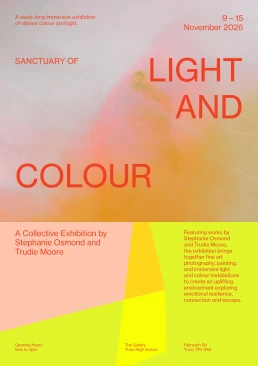
: : Upcoming Exhibition: Sanctuary of Light and Colour / Stephanie Osmond x Trudie Moore
Sanctuary of Light and Colour
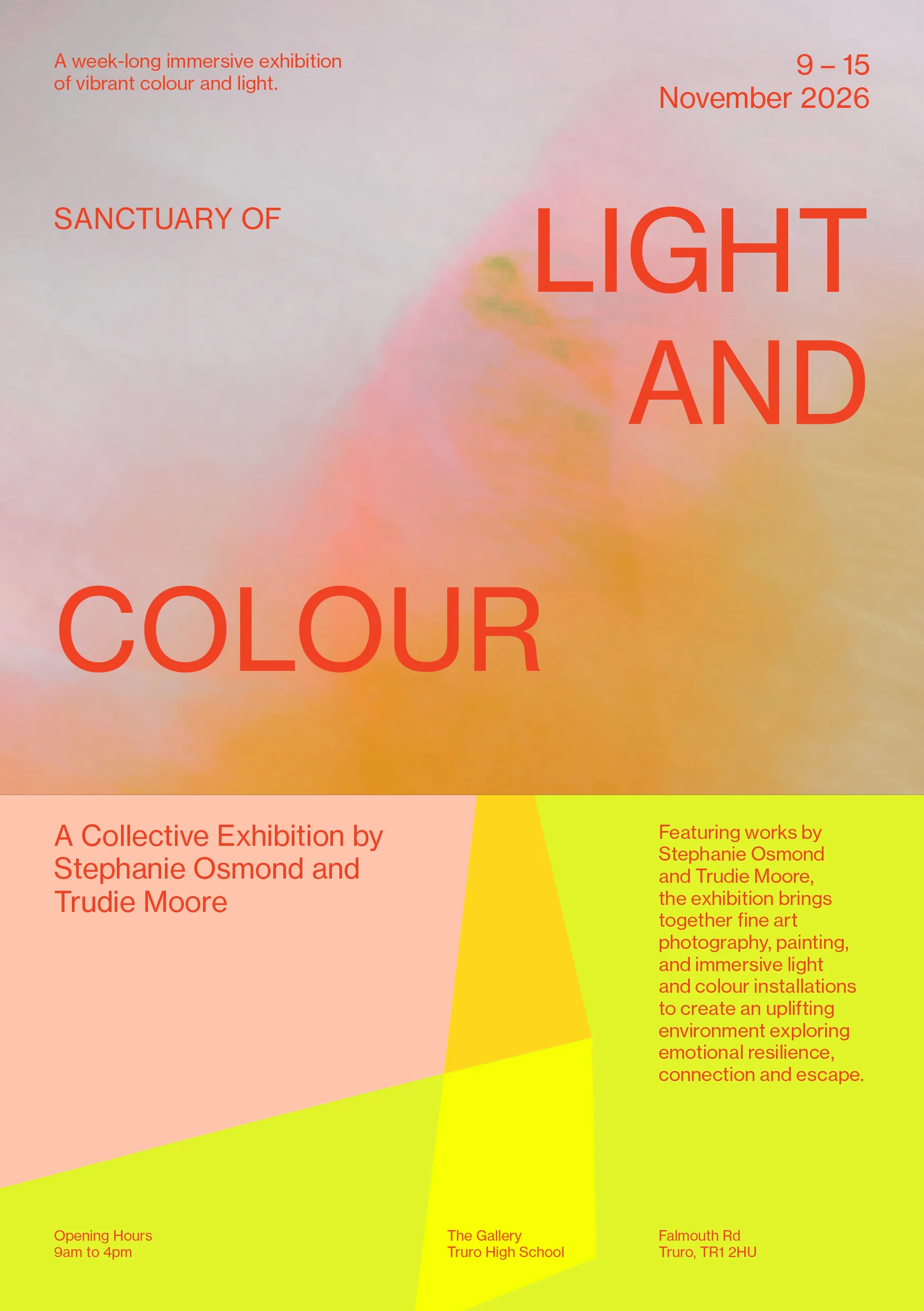
Join Stephanie Osmond and Trudie Moore for a joint exhibition of individual and combined works exploring light, abstraction and feeling.
The exhibition brings together fine art photography, painting and immersive light and colour installations to create an uplifting environment exploring emotional resilience, connection and escape.
This is a week long immersive exhibition of vibrant colour and light
9-15 November 2026
9am-4pm
The Gallery, Truro High School, Falmouth Road, Truro TR1 2HU
To receive updates, fill out the contact form below, subscribe to emails using the popup or send a message
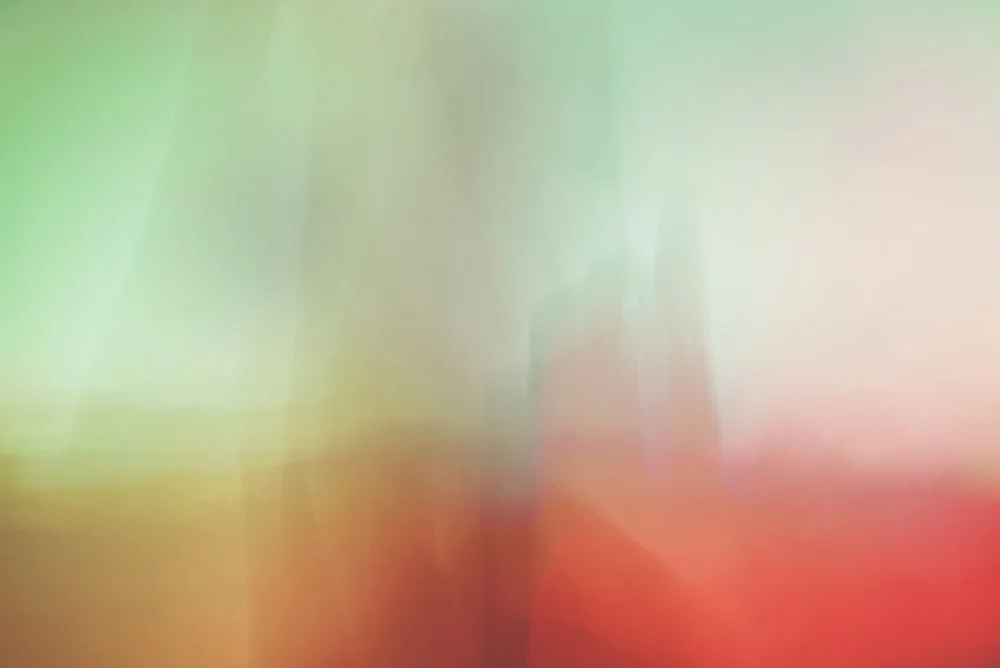


Creative process, colour and Cornwall’s light. Uplifting and communicating through sensation and materiality.

Your work often explores the tension between control and freedom. Can you describe a moment in the studio when a painting has completely escaped your original intentions, and what that taught you about your own creative process?
I have different ways of starting paintings and often I work on more than one at once because it enables me to process and articulate several ideas at the same time. I can carry out those ideas on different canvases or forms without them all competing with one another and this means that each one of those paintings is then articulated for a different idea and a progressive iteration. They are sometime small nudges but also can be bigger ideas about shape, technique or materials and that means that different surfaces and forms become linked with a continuous theme even though they might appear visually quite different.
I feel that this speaks a lot of the human condition for people who have busy minds and a lot of ideas. There is a calmness that’s obtained by focusing on a few precise moments and channelling them into separate outcomes.
Whenever I have started a painting with a pre-determined plan and have tried to stick to it, the painting doesn’t work. There is an air of discomfort, and it becomes contrived. It works much better to have a general plan of the particular contrasts I want to set up and for the techniques that I am going to use and to then refine those and bring them into a satisfying aspect within the individual work.
Sometimes the idea doesn’t articulate itself in the same way that had been imagined in the mind’s eye because it seems to be an impossible task to guide the immaterial visual into material being. That means that the materials do a lot of ‘the talking’ for the painting as they then form this kind of outcome that had been unexpected, but which also is a product of the artist’s experience and skill with the materials. I do make sure that the paint application is a refined and finely tuned experience befitting of the quality of the end crafting. Where there are areas that the paint leaks or spreads in an uncontrolled way, this creates a difficult feeling for me, as messiness feels like something that is not wanted or expected and will be judged. But in the end, I learn to enjoy and embrace it for its character and the way in which it brings this conversation to life. Leaking a little is like a twist in the intention that isn’t within my control, but that’s an interesting moment.
As a result, I have made a habit of approaching the canvas with very much an open mind about what is going to happen. There are so many difficult decisions to make to ensure that this valuable material isn’t wasted and that the slightest wrong move doesn’t mean huge dissatisfaction or even repulsion at something feeling uncomfortable.
I can stand at the edge of the canvas with the colour decided, the paint mixed to a desirable colour and consistency and then the real moment of truth about the success of the painting is held in the single moment that I choose to make the first mark or pour. But then things relax and the smaller decisions lead the painting on, one at a time. It does feel a little like standing on the edge of a rock being about to jump into the sea but it’s like making the first move in anything in life, you start something and it feels like a huge gamble with an unknown outcome where you don’t know how it will go, and you have to then respond to what you are met with in the next brave manner. Fortunately for me, I have always worked on a large scale ever since I was a student and that means doing big paintings doesn’t scare me.
All images © Trudie Moore
You worked with Bridget Riley during workshops in the 1990s, and colour remains central to your practice. Looking back, what is the single most important lesson you carried forward from that experience, and how has your interpretation of colour evolved since then?
I was so fortunate in the 90s to have had such a huge artist icon Bridget Riley carry out some workshops on colour. I remember trying to colour match to samples of her paintings and how difficult it was to obtain the exact hue and shade of a colour and to match it. Something so simple is a masterclass of precision and refinement and really looking hard. It’s so easy to imagine a colour, think that you have got it and then to realise that the visual frequency that the imagined colour was is such a long way away from that.
A whole lifetime could be spent in achieving this sort of precision and it really teaches you to look, think and create slowly and to give an extreme level of depth to the decision. This has stayed with me in my practice and as a result, the method of staying visually simple and being exacting was a lesson in the essence of abstraction.
I used to work with a full colour range that included greys and browns and what I would say were richer, earthier and solid or bold colours, but as time has gone on the palette has lightened and narrowed into clear and clean colours that feel comfortable to me. But being comfortable with colour to me doesn’t mean being safe. The colours I use are often rebellious, risky and challenging and maybe a little anarchistic, whilst being also clean, pure and full of light. There is a purposefulness to the light and bright colours because they are uplifting to those who are open to them, but equally they scare and repel others, especially those who want to stay in a ‘safe zone’.


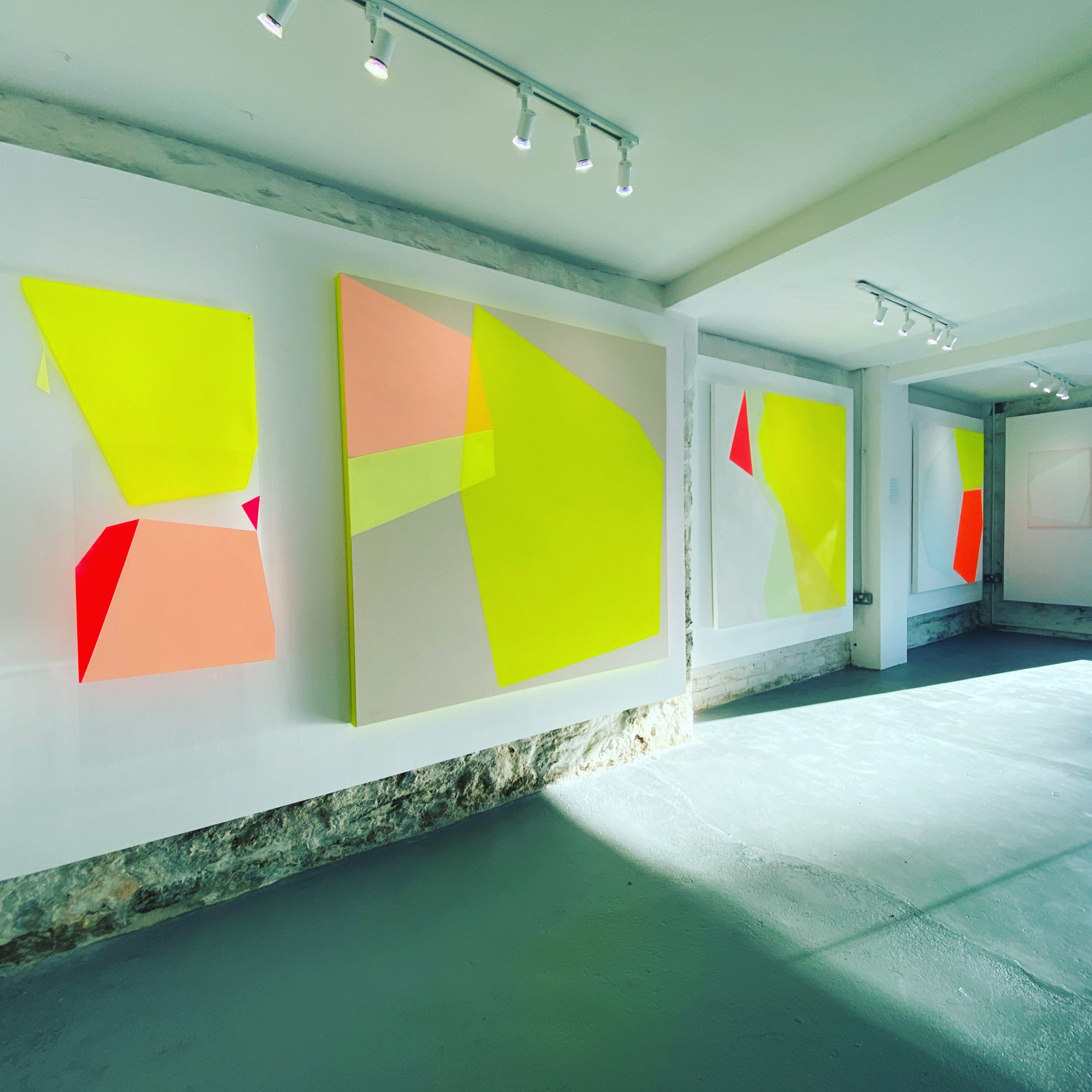
Cornwall is often associated with landscape painting, yet your work communicates through abstraction, light and material. How does living and working here influence your decisions without becoming the subject of your paintings?
Living in Cornwall and being surrounded by many landscape artists is a frank reminder of why I do what I do and why I enjoy it. It could be so easy to try to be someone else or to replicate the work of others to feel as though fitting in is the thing someone should be doing. Some of my very early paintings had elements of abstracting from the seen world in them but I felt more strongly excited by a purer abstraction that started in the 90s which was known as process painting – a variety of analogue treatments and experimental interventions superimposed upon the canvas. This innovative approach has informed my work as it opened my eyes to something that was completely new. What I really enjoy is creating challenging art that lives more on the edge of adventure. This is definitely a more difficult and independent path to follow that requires greater inner strength and conviction, I enjoy doing something that is different to others.
I spend a lot of time in nature and the wildness of the west coast with its elemental winds, risky seas and quieter places stops me from feeling confined and makes me feel more expansive. It’s impossible to keep these feelings out of the artworks as they are what creeps in to every part of life. The colour has evolved in line with these connections to nature and light and the purity of it. There have been some strong moments of what feels like channelling light into the paintings.
Materials-wise there is an aspect that links too and the synthetic paints are in strong contrast to the natural fibres of bare canvas. I like to touch and feel the sand, rocks, trees and feel purified by being in cold water. There are textures and shapes that Barbara Hepworth and the other famous artists of Penwith used in abstracted ways and I can feel the similarities and draw connections between the different elements of the landscape, those historic artists’ work and my work even though I’m not working in the same space that they were.

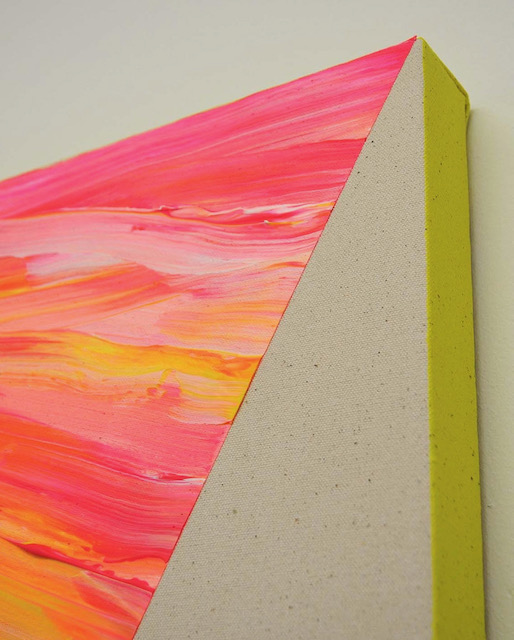

Your practice moves beyond canvas into acrylic constructions and installations that alter the viewer’s perception of space. What draws you towards these physical interventions, and how do you want people to feel when they encounter them in person?
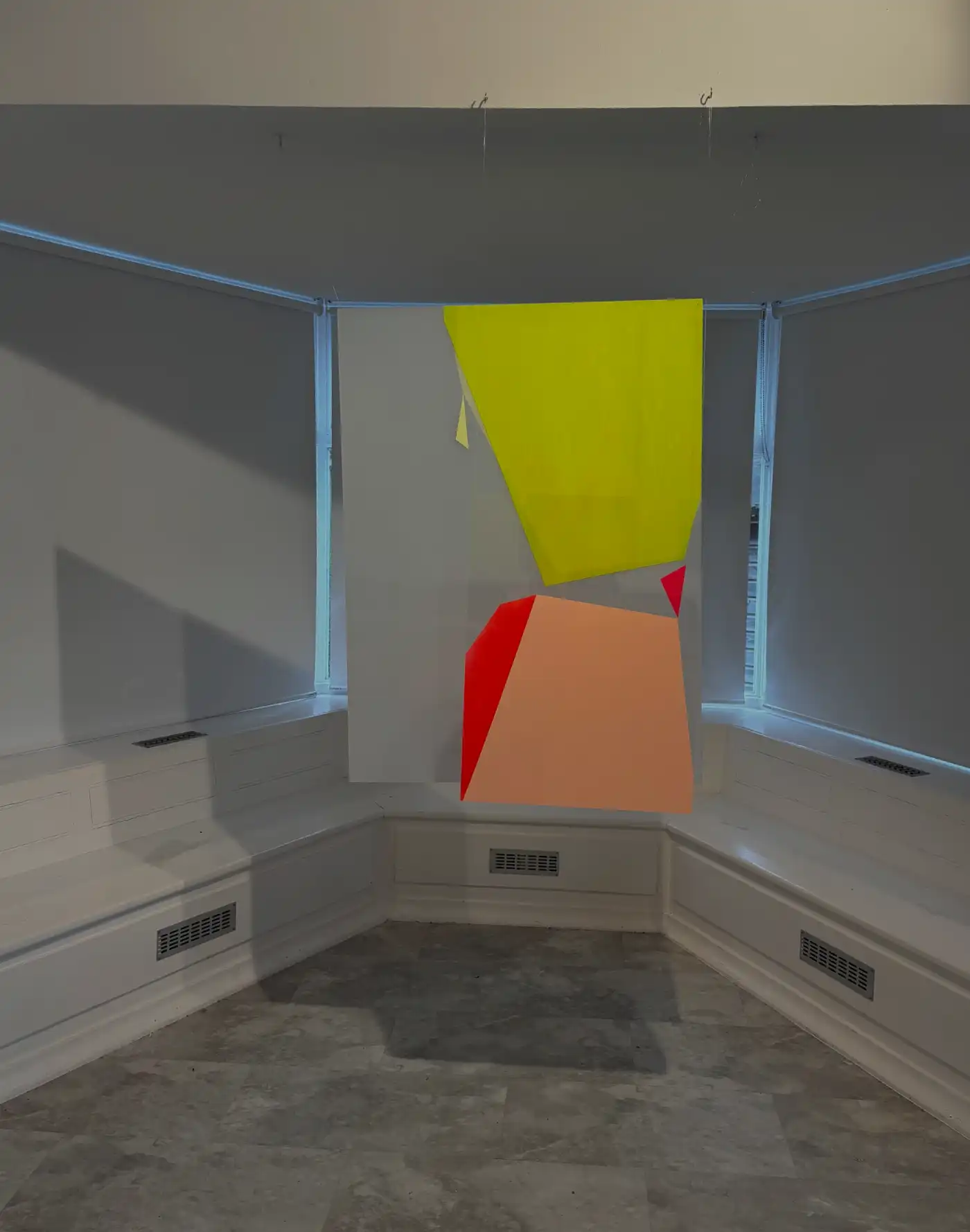
My acrylic constructions are an exercise into immersing people into more than one dimension, that of the two dimensional becoming three dimensions which then impact upon the fourth dimension (which l see as the glow of the paint coming into the room from the canvas) and then the fifth dimension, which I like to call the spiritual or emotional impact on their body and soul.
There is an experience of colour and an embodiment of it upon the person as they stand in the presence of it. For me personally the large yellow fields radiate warmth into my core and fill my eyes with a sort of stimulating dopamine hit that I don’t experience any other way. I have witnessed people physically change, straighten their posture and become more animated as they are hit by the impact of the paintings. They know they are drawn to walk over to them and just after they are stood in front of them the mental and physical uplift takes hold. It’s an exciting prospect to find something that can help people to feel good and create a sort of social impact, especially when times are so difficult to navigate.
My work is an exercise in communicating through experience and feeling and if that’s the main takeaway from what people see then that means I have succeeded.
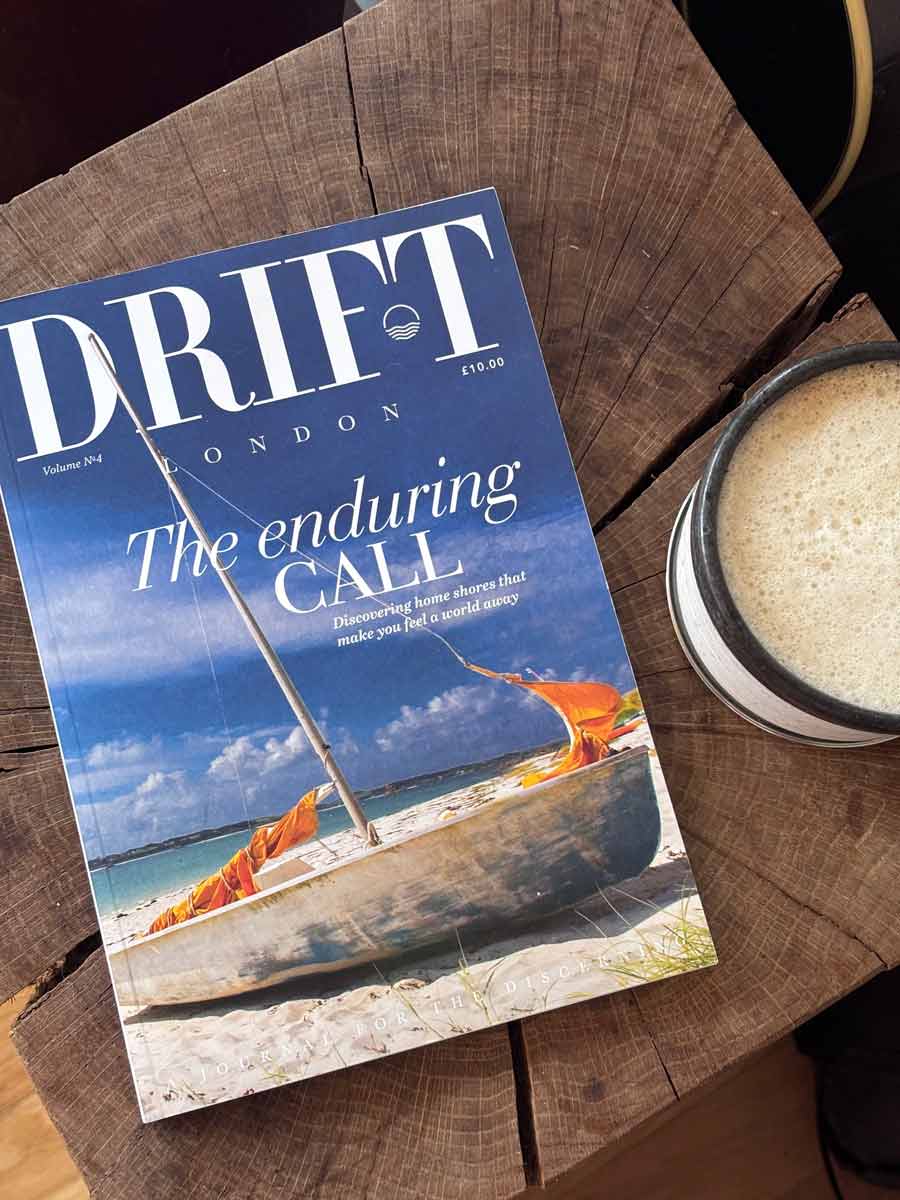
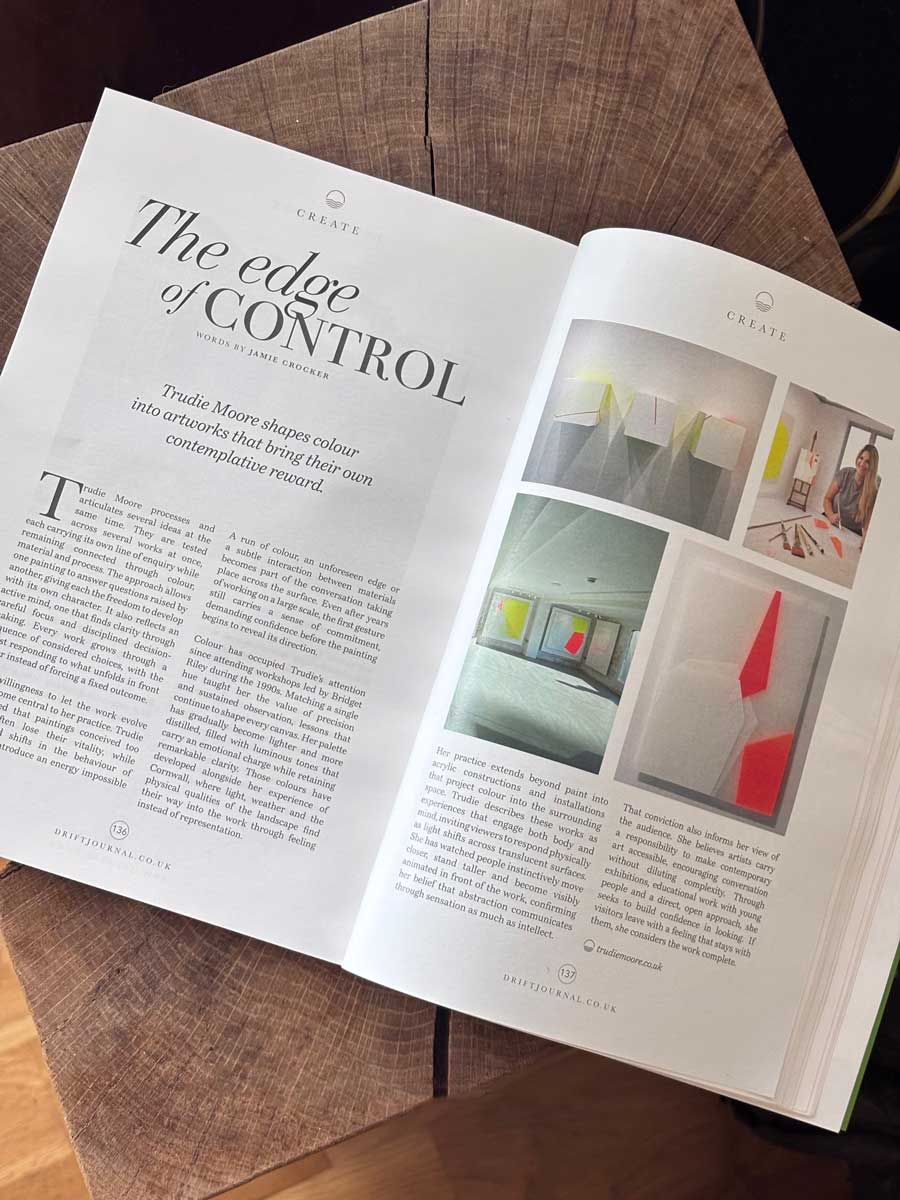
A long form interview that goes further into depth from The Edge of Control, a feature in Drift London. The questions in this article were supplied with thanks by Drift Journal.
The edge of control - Drift Journal
The edge of control - Drift August 2026
This summer I spoke to Drift Journal about my process and living and making art in Cornwall and how it inevitably takes a role in shaping how the works present themselves.
In this article we talk about the influences over a long period of time, what I’m looking for in terms of how I control the artwork, my considered choices and how I allow it to evolve.
“..Trudie describes these works as experiences that engage both body and mind, inviting viewers to respond physically as light shifts across translucent surfaces. She has watched people instinctively move closer, stand taller and become visibly animated in front of the work, confirming her belief that abstraction communicates through sensation as much as intellect…”
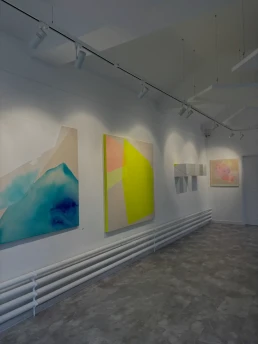
Artist in Residence at Truro High School for Girls
Artist Gallery Residency
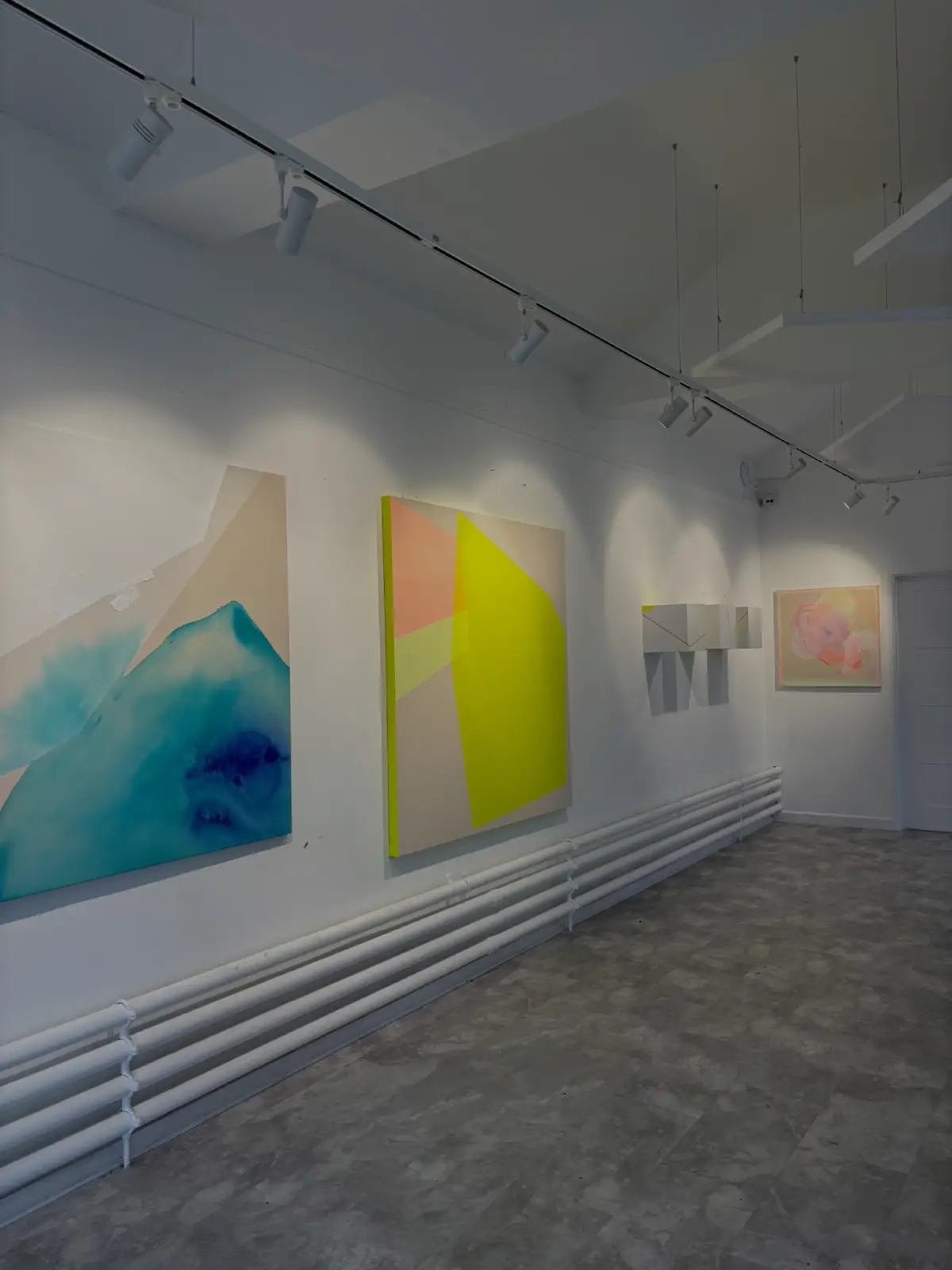
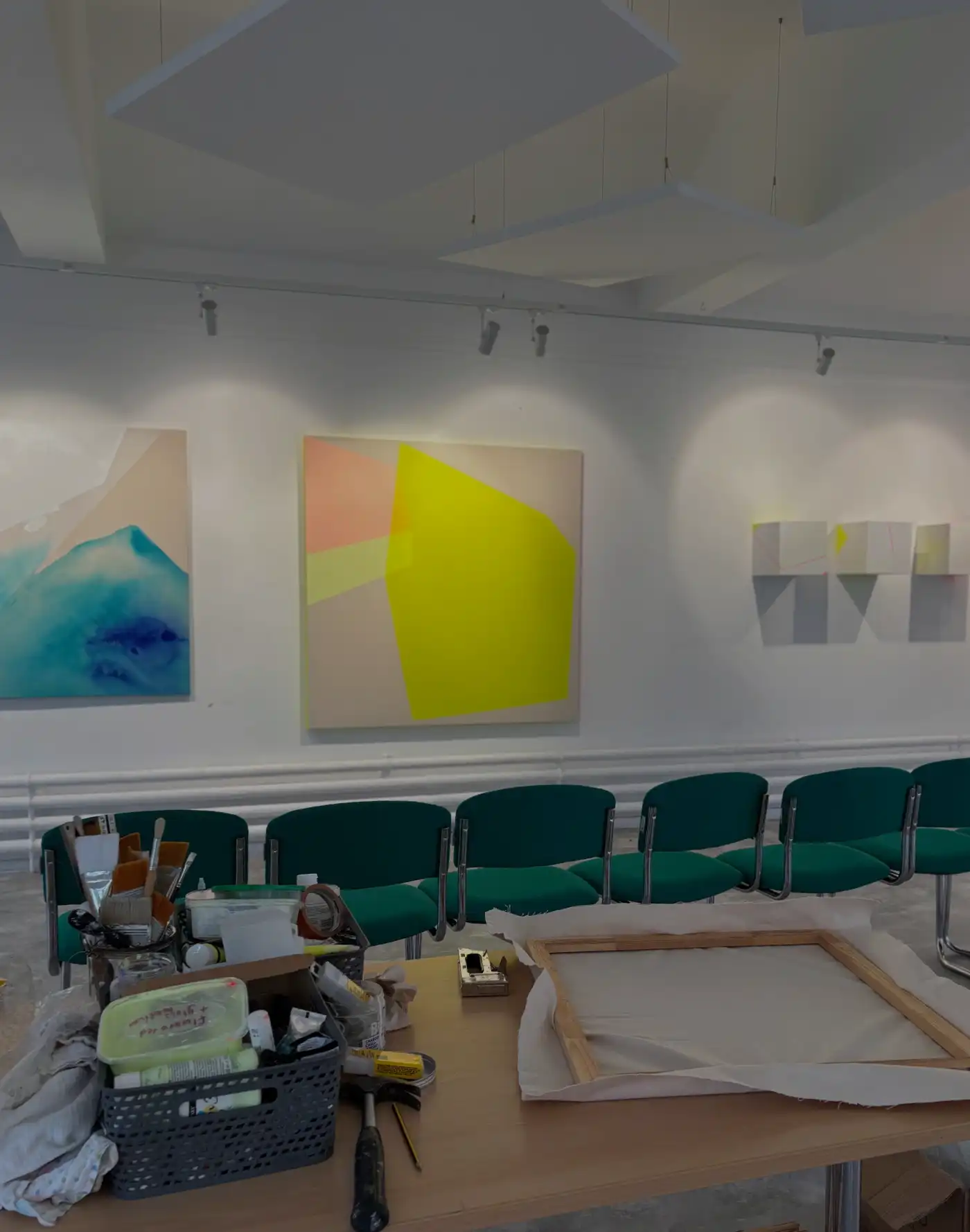
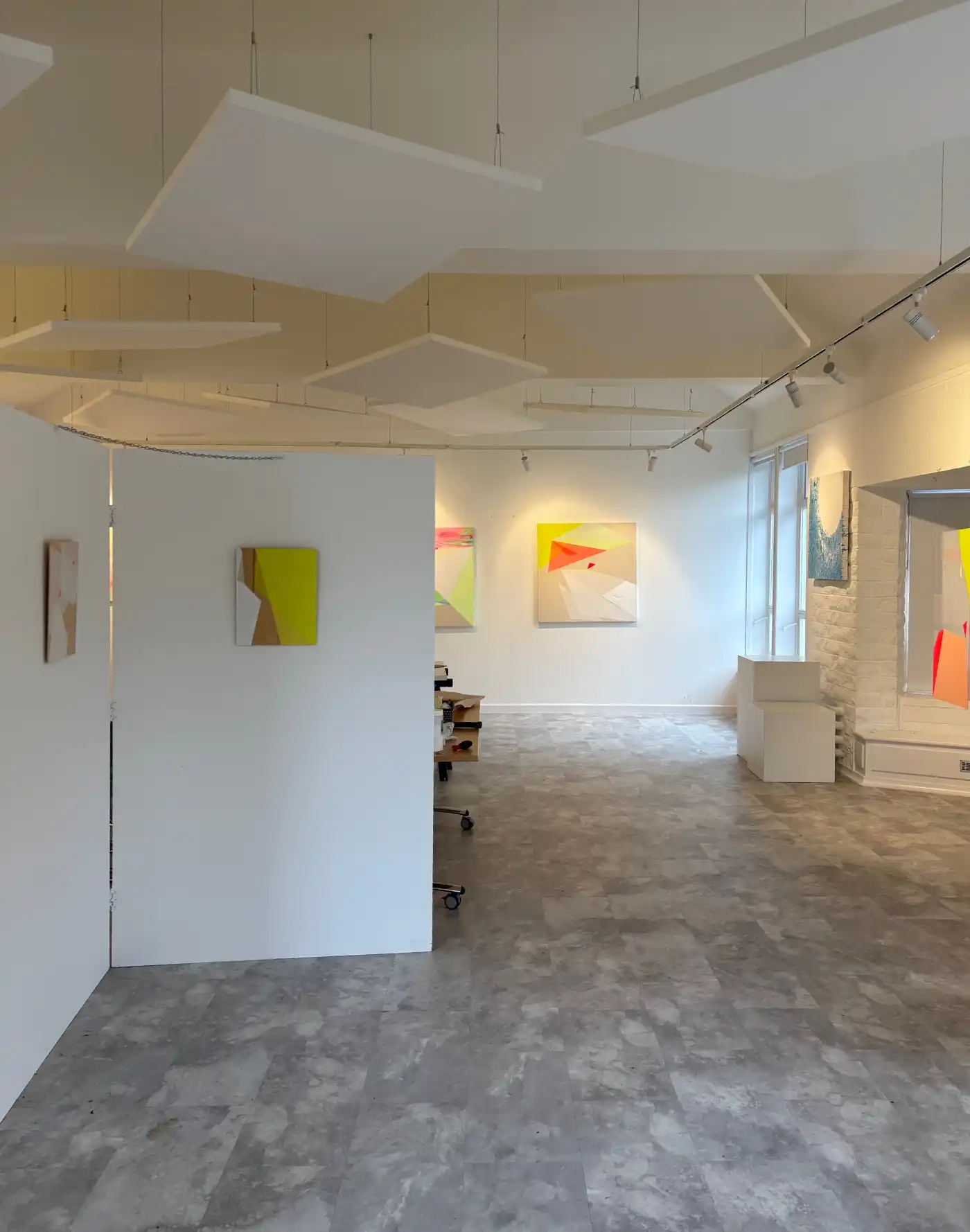
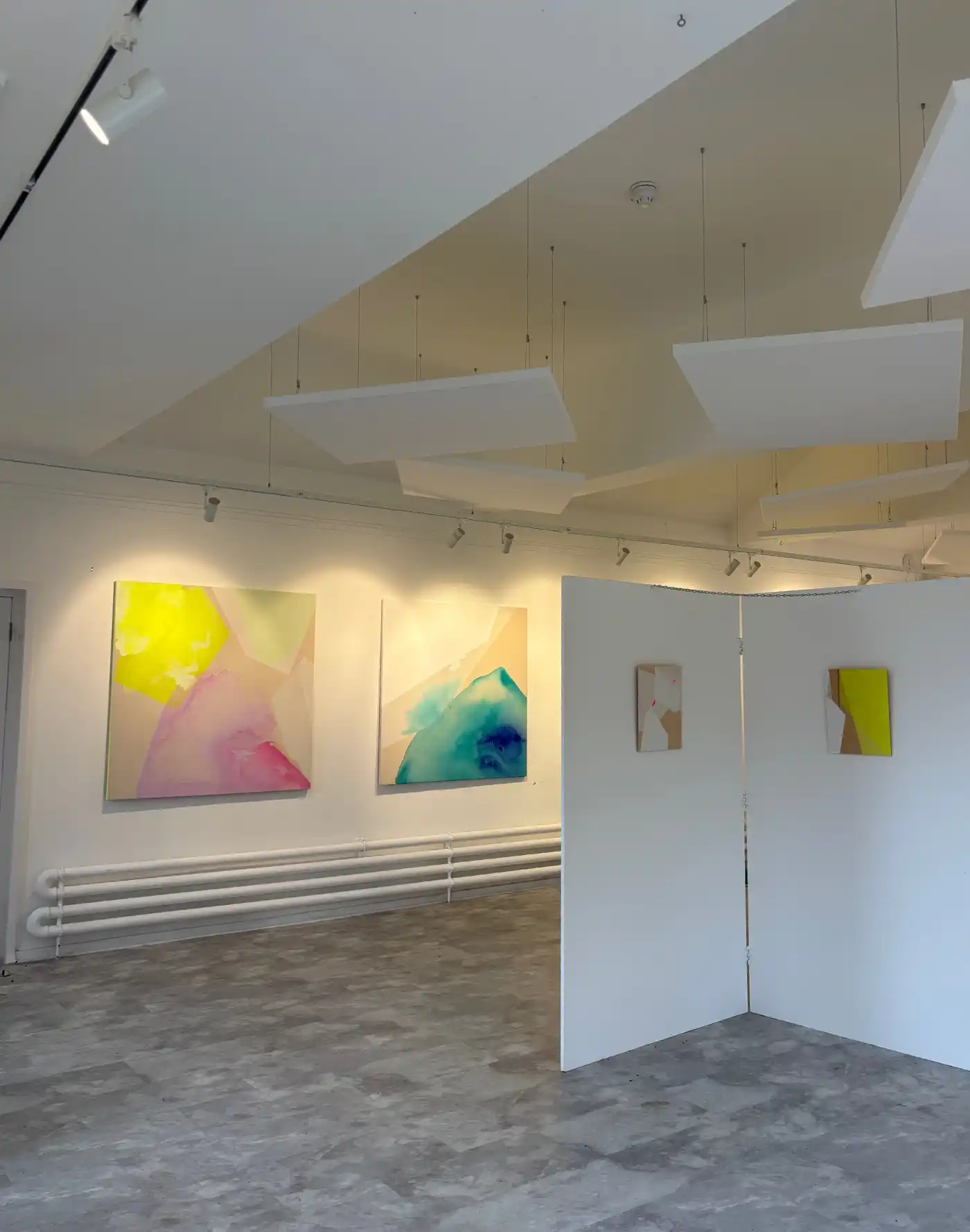
For the last fortnight I was delighted to take up residence in the gallery at Truro High School for Girls .
A lovely warm welcome was waiting for me over the last two weeks and it’s been a really varied experience to be in an educational setting and to take part in bringing abstraction and colour in contemporary art practice to these young people and seeing the different ways in which they can engage with it as a part of their academic syllabus.
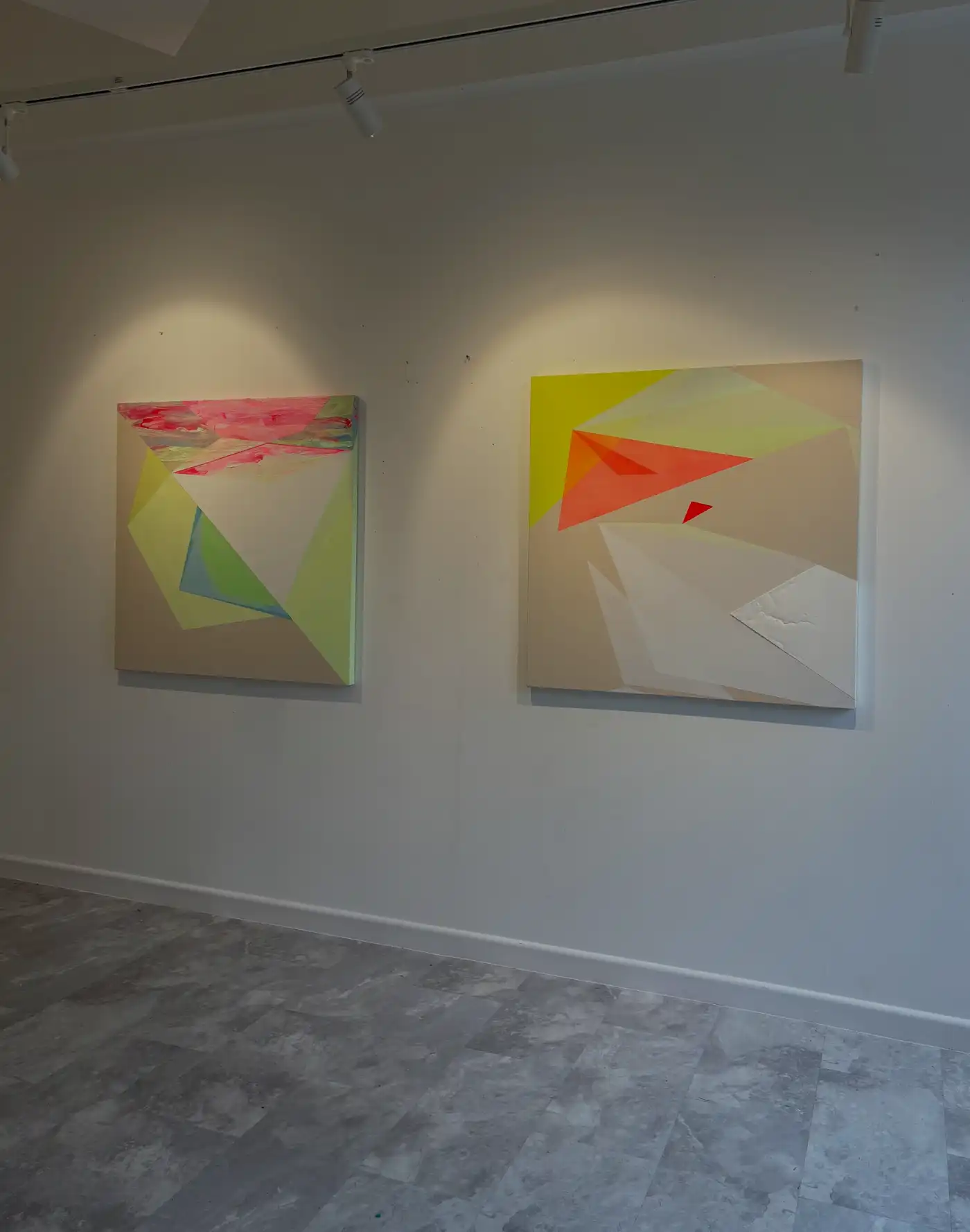
I took over a selection of recent works, pieces in 3D large scale works ad one or two older pieces to demonstrate how artwork practice can evolve and to show the different lines of enquiry that can emerge from an experimental approach to painting.
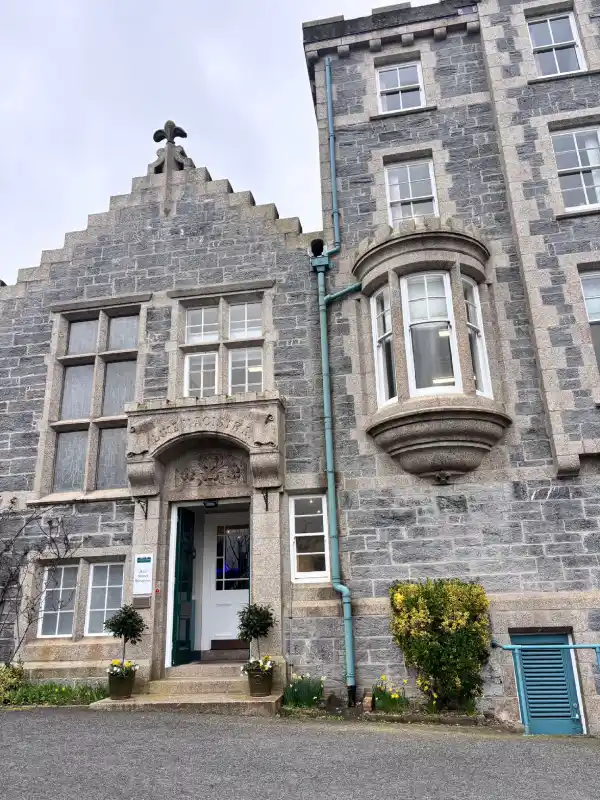
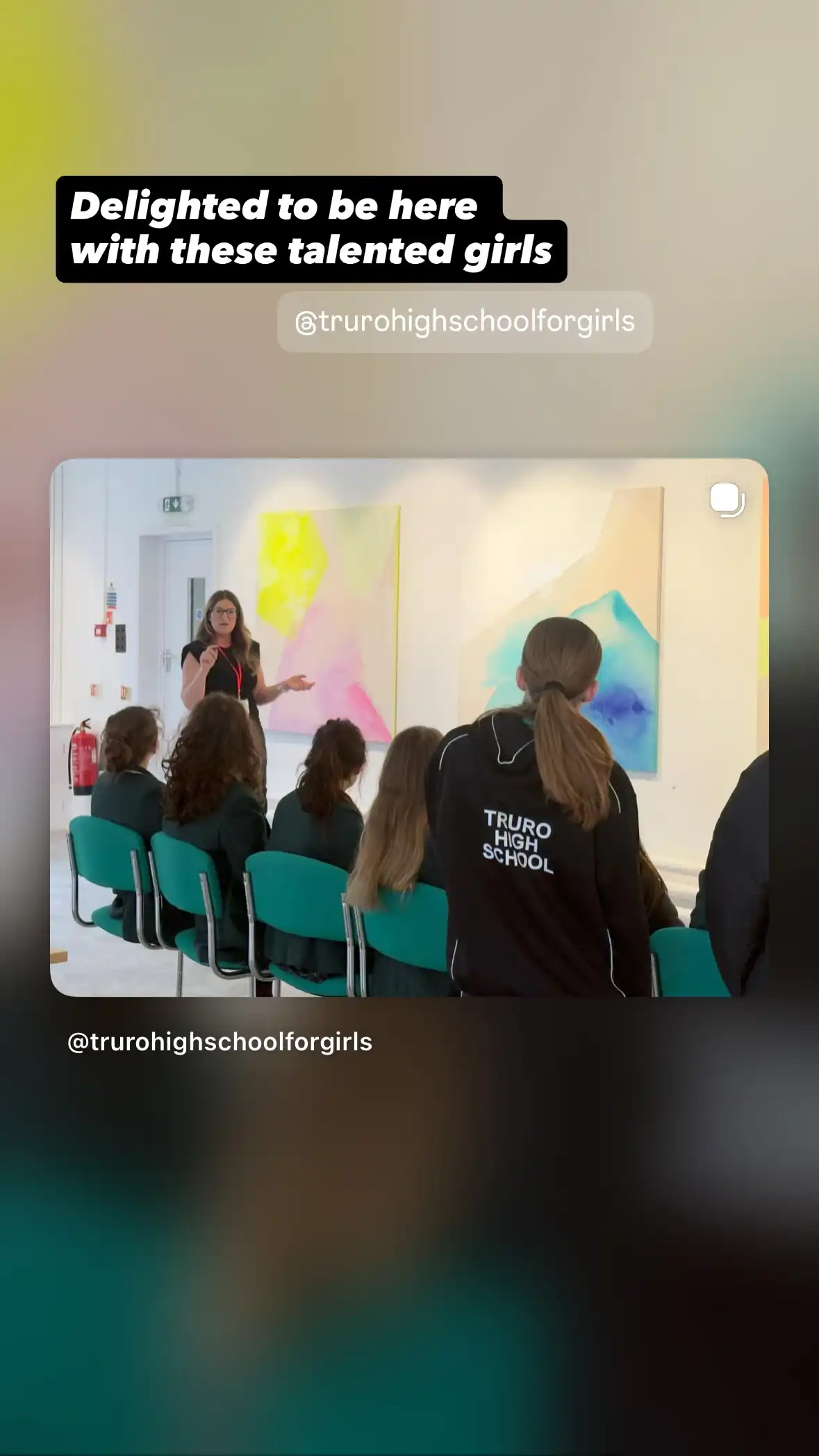
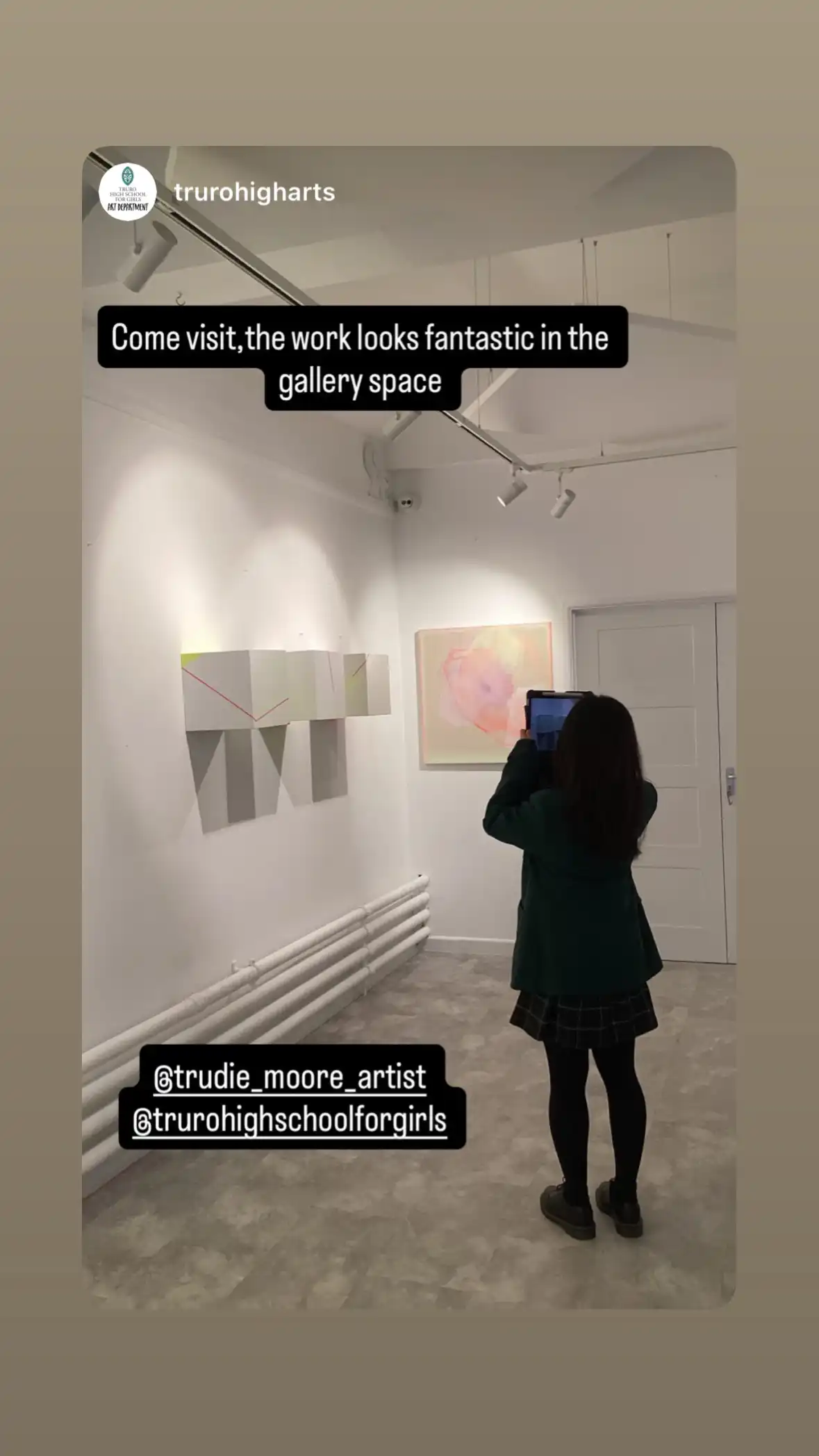
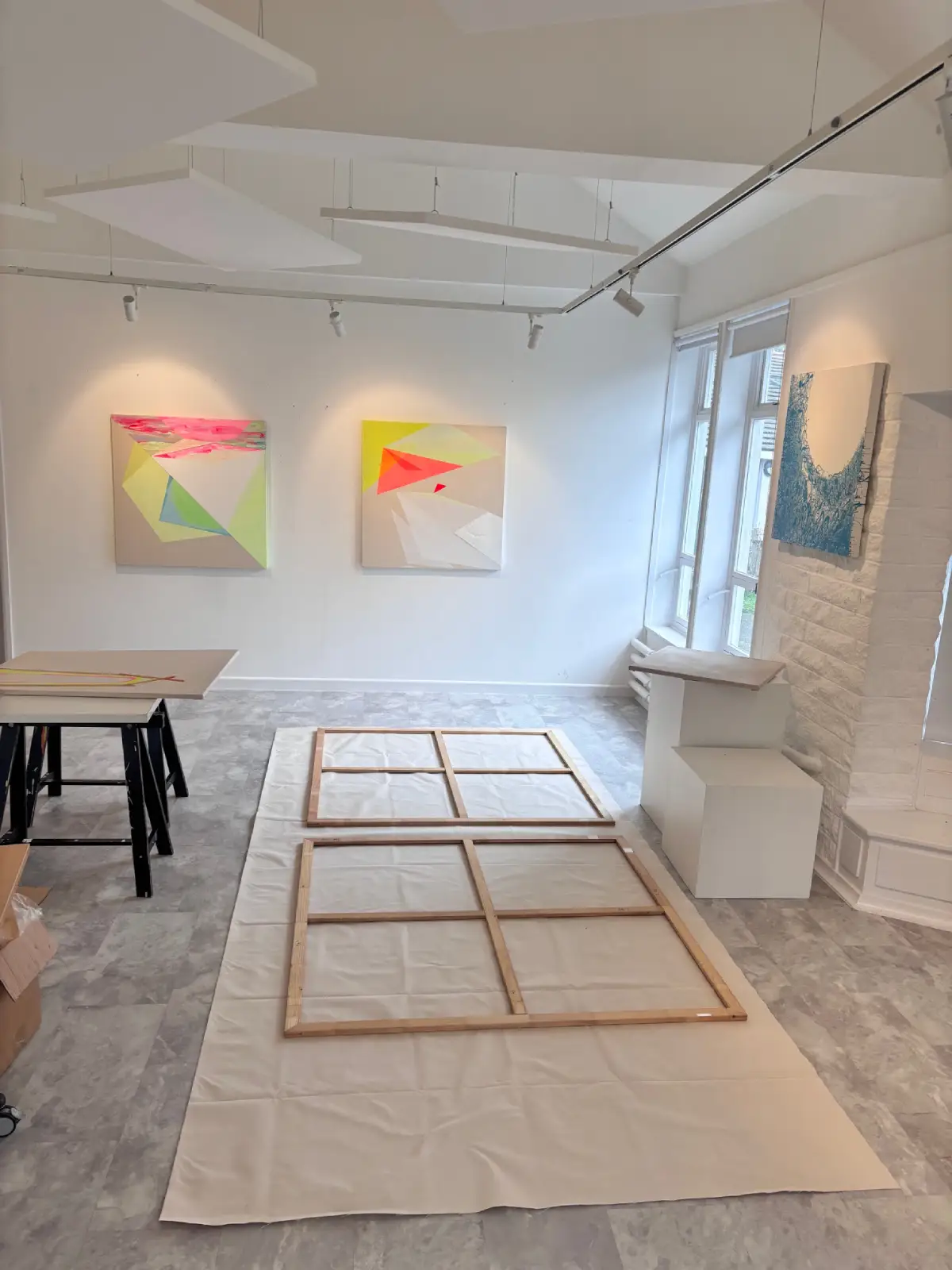
Truro High is really well equipped with a gallery to be able to run shows for the pupils and visiting artists and I had the freedom to start on new work whilst occupying the gallery which added depth and richness to the ways the pupils can see the work and understand the processes.
Different talking points around abstraction
Together with year 9 we discussed a range of influences and concepts that go into my work and where those fit culturally. We explored ways in which other current artists use similar themes to mine ad how that sits within the context of modern art history.
I demonstrated how colour can reflect or create an emotion, and also how punk culture has used disruptive colour.
Also we had a look at balancing colour palettes with bold and energetic colour by adding softer tones, described the process painting techniques that painters such as Ian Davenport and Jackson Pollock utilised and how those have informed the materiality of my works. We covered how being precise about colour like Bridget Riley can be really important and about how slow processes lead to carefully decided actions, and how taking risks helps to find success.
Creating new pieces in week one
Week one of the residency gave me the opportunity to break away from thinking about existing works that have been lingering and to move on and cover some new ground. I don’t think I would have otherwise carved out the space so this has been a great nudge to make a start! Here’s what I did:
- Started smaller pieces on canvas and perspex
- Stretched some big canvases
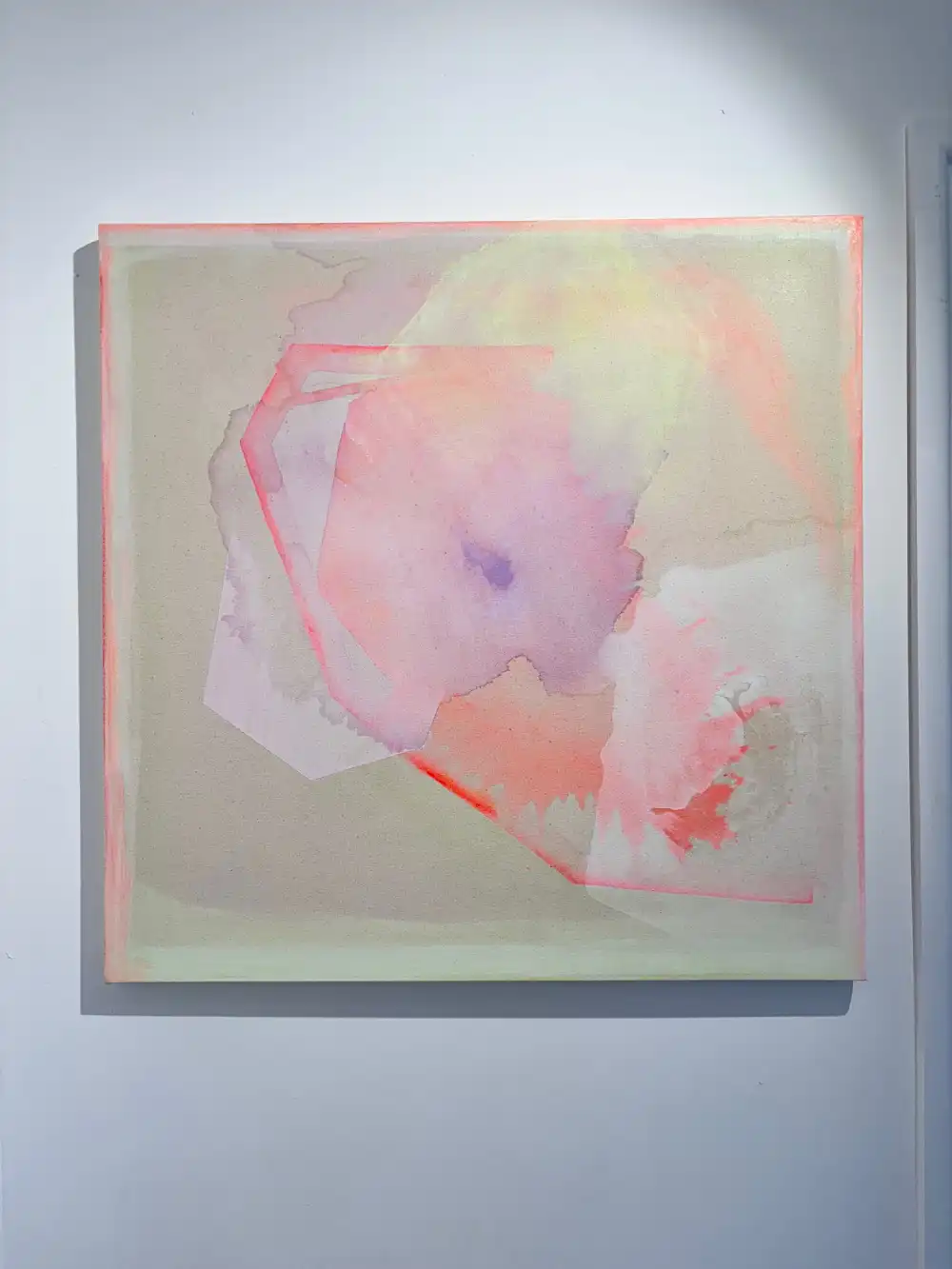
- Paint fluid forms built in layers with more delicate colour palettes
- A couple of other completely different perspex experiments
- Some planning for a future project
- Coordinated some pieces on site that were chosen in advance for the properties that I wanted to talk to the pupils about
It was clear by the end of week one that the change of location and the feel of the place has put me into a different mindset and has stimulated some altered visual results both in terms of colour and form and relaxing the geometrics to create some fluidity.
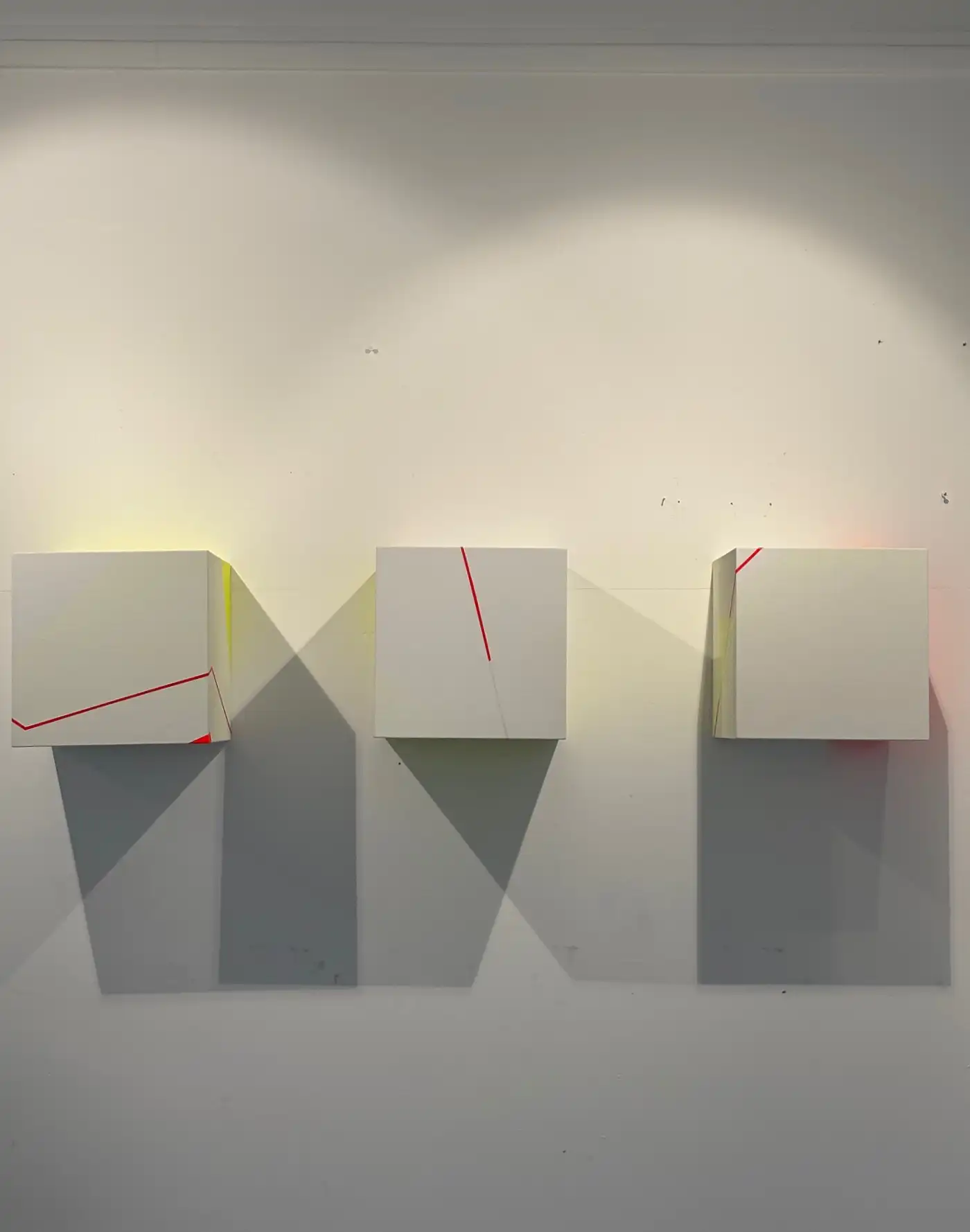
I have taken away some of my own sets of rules around what the paintings need to be like and have delved into being a little freer. The perspex panels are a layered (front to back) painting and have been sat around in the studio for a long time with a lack of decision around starting them. Painting them now, in synchronicity with the smaller canvas has become a 3D layered triptych that partners the canvas so that when hung the two paintings can accompany one another in telling the story of the materiality.
I also did some work to one of the large canvases which started with a glimmer of a thought prior to beginning, but in the end I dived in and responded to the outcomes of the initial application as it started to form.
.
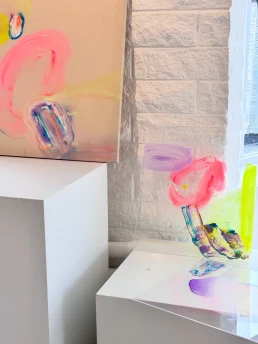
Talking about process, materials and switching the lights off!
With a smaller group of year 12 & 13 pupils we had a great time talking about the physical painting process, how a painting started, how I would make a start on the two large pieces I had just stretched and going from blank canvas to making the first ambitious and risky first move, but then moving past that to manipulating the materials and then allowing them to sit and find their place.
- We chatted about control of materials, and again, risking the painting while adding areas of colour and doing big pours and hoping for the best, but then appreciating the unplanned things that can happen and seeing where they take the painting. Then onto living with the artwork to see how it might develop and seeing how that can help with decision making as the piece progresses.
- We looked at the potential for different materials and different iterations of themes and how they would change a piece, such as canvas boxes being re-created in a transparent material and playing with the light to get the pieces to change and take on colour, shadow and then at how it adds dimensions that the viewer can see and feel.
- We demonstrated how multiple pieces can be considered as different strands of the same body of work, but seeing what different directions they go off in, and then viewing those variations that have happened over a period of time, whilst they look different, as being a cohesive collection (with a little side note on how this is very different in a fine art practice to being a commercial artist, where the same formula is repeated to create customer / viewer understanding and recognition). In this practice it’s about risk taking and developing ideas without rules in order to make discoveries that push the practice forwards.
When we looked at colour and the luminosity of the light on the paint we had a go at switching off the lights to see how the effect of changing the lighting might increase the charge of the colour in the dark ( as I was writing this and looking out of the window I spotted the sky switch to night mode, looked straight back at my phone and the notes app also did that!) also talking about the properties of phosphorescent paint and pigments and planning to create a ‘dark version’ of a piece that uses phosphorescent pigment to glow in low light and how using a range of the innovations in materials can help to change artwork.
We then moved on to finding out about their personal projects and seeing how this gives them an individual line of enquiry, and talking about how those themes fit into the diverse range of contemporary practice, artists and genres that could be used for helpful reference in developing those themes they are working with.
Finally, we also had a go at getting the girls to rate how they felt before and after the ‘colour bath’!! They returned back to the classroom and rated if they felt uplifted by the artworks.
Week 2 – progressing paintings and sparking an interest in abstraction
I was really chuffed to see lots of year 7 & 8 pupils in the gallery with watercolours doing studies on the artworks and finding parts of process, abstraction and composition that they found appealing that they could zone in on.
The works that I had started in week one progressed quite a long way with some huge bold moves on the two large canvases, one medium painting scrapped and some well considered progression on the perspex and smaller canvas. Sadly these had to be left to dry for some while as they are quite wet and so will take more attempts to complete in the studio, however I’ll photograph then and maybe will be able to bring them back to exhibit!
Thank you Truro High School for Girls for a truly memorable fortnight
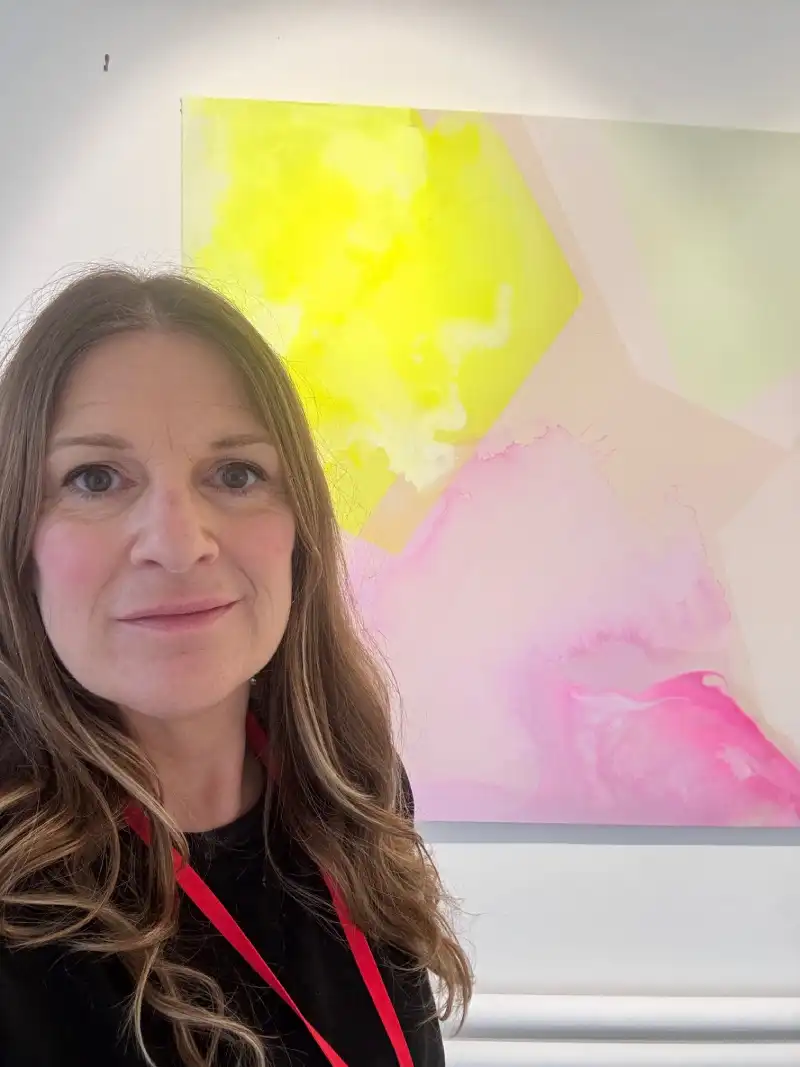
It’s been a valuable time and if you have found this interesting and would like to come to a future exhibition please join my email list below or get in touch with me
Sign up to emails
If you would like to be invited to a private view, or receive notifications for exhibition, regular updates by email from the blog, then please sign up to my email list here
or follow on Instagram or my Facebook page
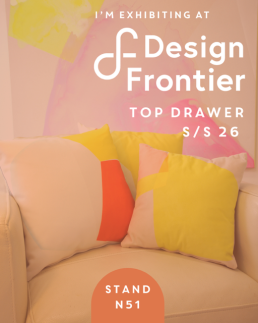
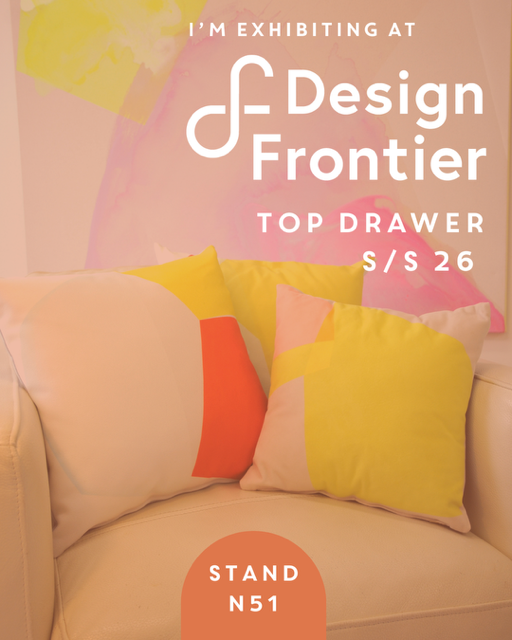
Olympia Calling - Top Drawer SS26
Find me at Top Drawer 11-13th January 2026
Stand N51- Design Frontier
I'm delighted to be showing key samples of my range at Olympia this January as a part of Design Frontier who are showcasing creative talent from Cornwall.
This is an exciting event for me as I have been building my catalogue up this year to be able to make a really comprehensive wholesale offer for high end homewares and am looking forward to presenting a collection that will appeal to the art and design savvy buyer, lovers of bright colour, minimal and maximal style, and an offer that will appeal to home stylists and designers, gift retailers and galleries.
Come along to the stand and out more!
For press:
Trudie Moore is a contemporary fine artist known for her bold, colourful and large-scale abstract paintings. Blending fine art with functionality, she transforms her dynamic work into beautifully crafted homeware pieces that turn everyday objects into expressive statements.
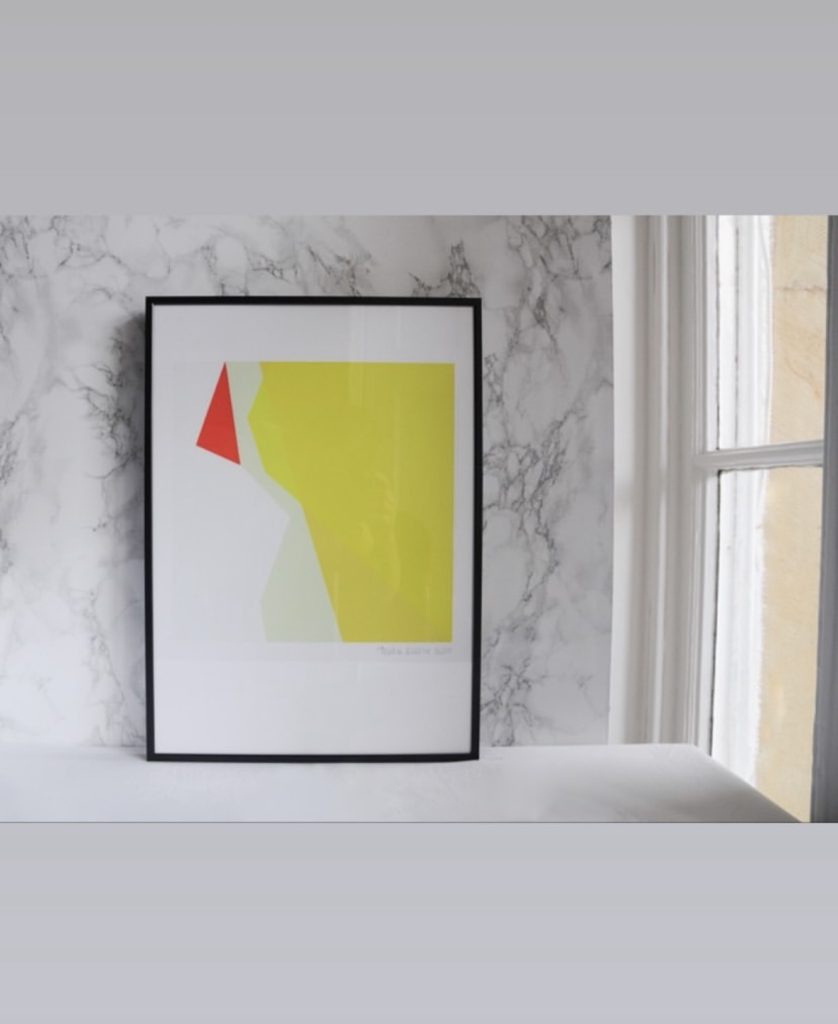
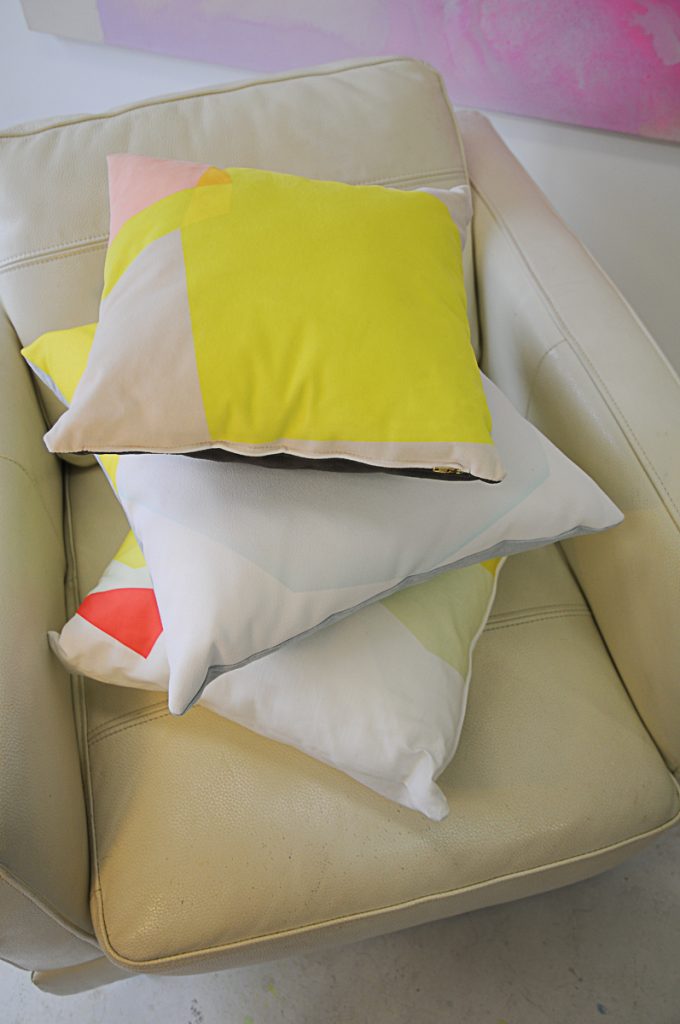
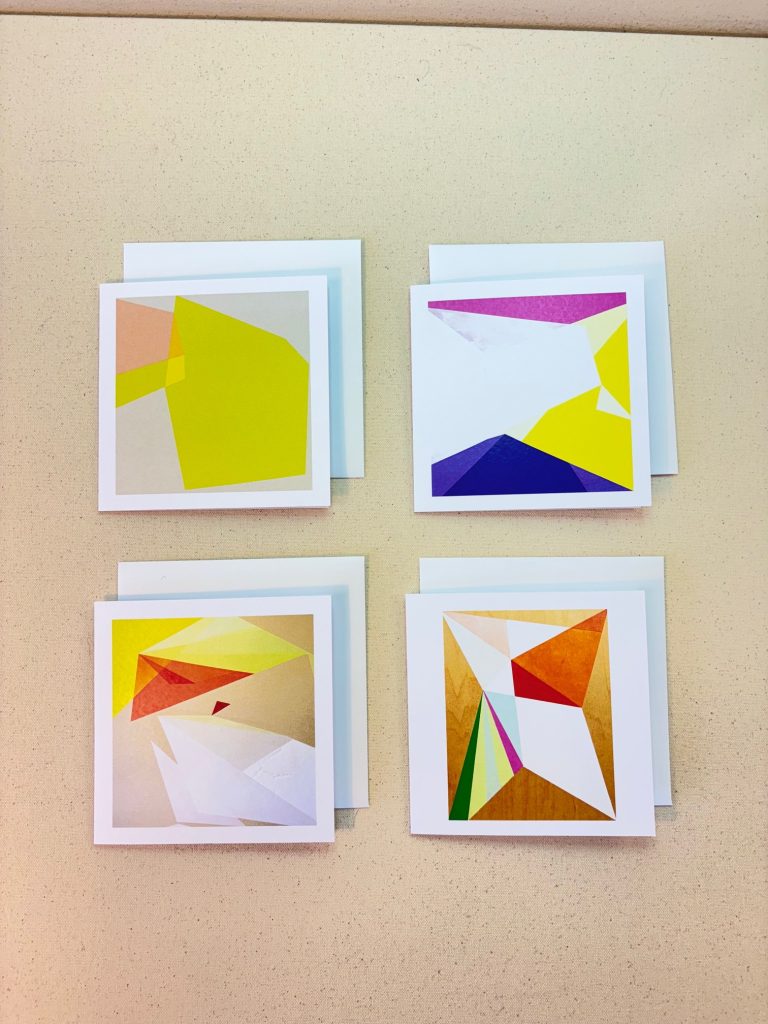
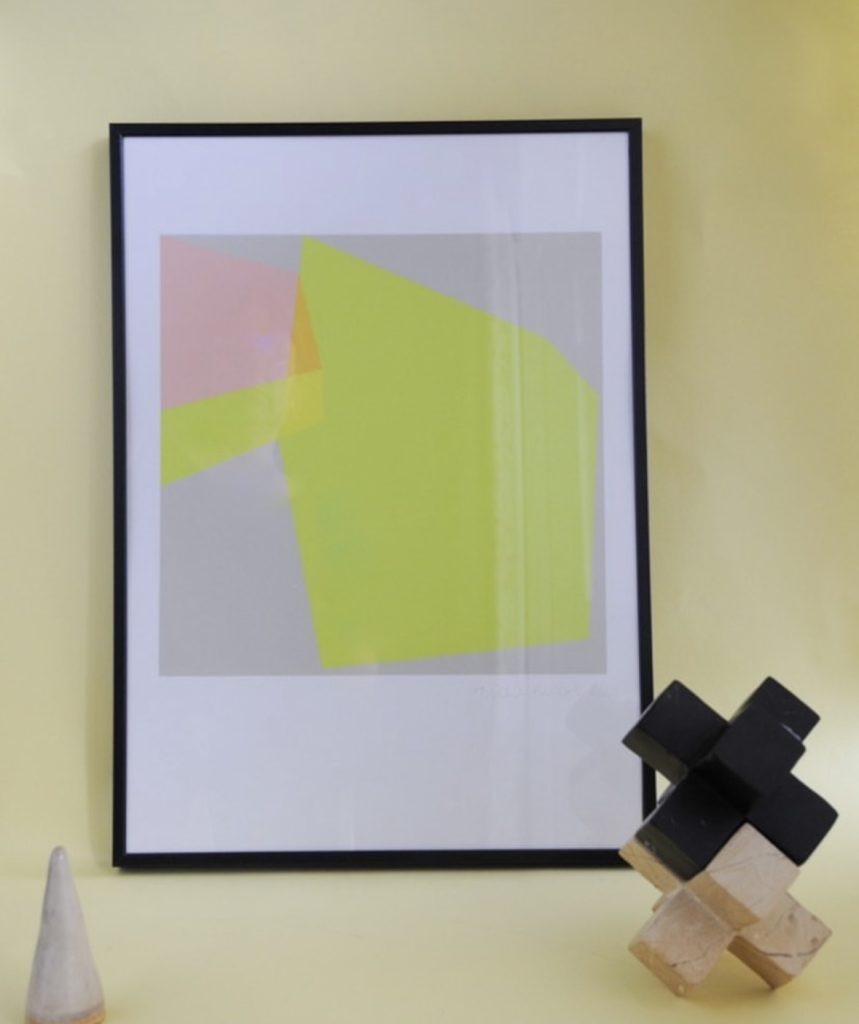
Her collection includes sustainably produced cushions and fine art giclee prints, each featuring one of three uplifting abstract designs. The range brings energy, creativity and modern sophistication to any interior, offering art lovers a vibrant way to live with colour.
Find out more about becoming a stockist on the wholesale page.
For a catalogue, line sheet and terms, please get in touch.

Pay Later with PayPal
PayPal Pay in 3 - Pay Later with PayPal on my website
Art can be a big investment! I've activated Pay Later on this website so that you can check out securely and purchase artworks by paying in three instalments.
To date I have offered flexibility via Bank transfer, 50/50 invoicing, cash or bank card on collection alongside using the PayPal payment gateway (which takes bank and credit cards), but now by offering Pay Later you can take short term 'finance' at 0% Interest.
Why I'm offering it:
- You get your painting straight away
- I get paid for the work in full upfront
- I get charged the standard PayPal fee
- the checkout process is secure and has a level of buyer and seller protection by PayPal
- it makes art easier to afford and to buy, which means I can ship nationally.
WHAT YOU NEED TO KNOW
- Pay in 3 is less regulated than other credit agreements so please read up on PayPal's website first
- You have to sign up to it
- you can monitor your payments via their app
- Initial payment made at the point of purchase with the following 2 payments made on the same date over the next 2 months from your debit card/bank account.
- 0% APR
- Use it on transactions between £30- £2000
You can find out more here: PAYPAL PAY IN 3
Please note: this feature is new to my website, so if you experience any issues with the website during purchase please let me know! Trudie@trudiemoore.co.uk


One Tree Planted and War Child donations
One Tree Planted - or more per sale!

My website is built on Wordpress and I'm joining in with their "WordPress Gives a Hand" charity movement campaign that's running from 25th-31st December 2023.
For my part, from 25th December 2023 to 31st January 2024 I'll donate a percentage of my online art sales to help One Tree Planted with reforestation.
We are in a climate catastrophe and are suffering a biodiversity apocalypse. The UK is one of the most nature-depleted countries in the world, we have lost over half our wildlife in my lifetime due to human activity and I want nature to be restored not just for the climate, but for all the species that depend on it.
Here's a map that tracks global forest loss to bring it all to life.
The amounts I'll donate are as follows:
- £1 on sales under £15
- 10% over £15 up to £200
- £25 above that
You'll be joining me in this venture as soon as you shop on my site!
 NO CHILD SHOULD BE PART OF WAR. EVER.
Warchild collections and donations from Open Studios
In December I was collecting for War Child during Krowji's Open Studios. I ran a small collection and promised to donate 10% of my sales for the weekend over the cost of the Open Studios fee (£35)
Sadly the donations given were less than £2, but I intend to carry this campaign on throughout the year by giving a fee the same as for One Tree Planted above. When you buy from me you can choose which of these two causes I donate to.
- £1 on sales under £15
- 10% over £15 up to £200
- £25 above that
War Child is the only specialist charity for children affected by conflict.
Around the world, children are facing unprecedented levels of conflict. This is especially true in Gaza and Israel, where thousands of children have died in the most recent escalation in violence, fighting and bombing. Terrified, traumatised and unsure of what the future holds, children living in Gaza, Ukraine and other conflict zones around the world are in desperate need of protection.
Find out more:
https://www.warchild.org.uk/
When you buy from me you can choose which of these two causes I donate to, please let me know in the notes field or by email!

New Work // Untitled with Disruption
New Work // Untitled with Disruption
/September 2023
New abstract painting on canvas. Abstract with gloss and acrylic relief in yellow, white and fluorescent marbling

Presenting my latest work, Untitled with Disruption [Abstract with gloss and acrylic relief in yellow, white and fluorescent marbling].
100 x 100cm, artist’s acrylic and water-based household gloss paint on natural canvas.
As with the other recent pieces that I’ve been making, this painting continues the exploration of my ongoing body of work which started around 7 years ago.
In general my work is quite purely about process, materiality and more simple perception of abstract art, focusing on colour, composition and material, but in the last 3 years or so I have felt that my own personal interaction with the works, and the application of myself to them and how I feel when making them is becoming more apparent.
The last few paintings have been articulating expansion, clarity and calm, this particular piece explores some feelings of deliberate disruption. The blatant contrasts of surfaces, strong use of asymmetry and angled lines create energy and momentum are specifically pushing towards a strong feeling of positive disruptiveness in this particular painting.
This coincidentally mirrors aspects of my life, especially in this last year. It has been one of continued upheaval, adaptation and positive reinvention of myself. The personal aspect is a new strand of influence upon my work, although the core aspects of painting process and abstraction are still the foundations of it.
As with all creative processes, the painting contains elements of experimentation, risk-taking, conversation with the piece itself, and this results in changes and developments which bring it to a new space.
The process that led to the completion of this piece took itself through an experimental and therefore disruptive stage before turning some large directions to bring it to completion. If you were to peel back the layers and see what’s hidden under the surface you’d find a stage of the painting that happened which was entirely different, but which I felt the need to hide in favour of a final aesthetic. The experimentation has pushed me towards a yet-newer colour palette than the last sequences of paintings. This palette feels as though it’s shaking things up, which is something that I was looking for as I felt that my colours were becoming limited.
The colours that I have been using for the last 5+ years have become a strong part of the work I create. Observing those who look at my work I’m energised and filled with the positivity of those who are brought into my environment. I feel that the work has the potential to uplift its viewers and to make them feel a sense of positivity and happiness, partially through colour theory and immersion within environments.
The background of this work:
In this wider body of work, there is an amplification of the experience of colours, layers and planes of the painting surface into three-dimensionality, enhancing the vibrance, brilliance and clarity of colour.
The natural duck cotton gives an organic contrast with the syntheticity of the acrylic paint and it complements and enhances the tones, transparencies and opacities of the applied planes of colour.
The geometric forms and layers nod towards a three-dimensionality and future plans to widen my practice into ‘other’ dimensions.
Sign up to my emails using the form below if you’d like to watch my experimental progress this year.
Alternatively, you can help to support my fine art practice by visiting my shop
This work may be available to purchase – please get in touch
I retain an exhibiting body of work of my practice, to be able to share my work with more people. While not all of my works are for sale, I have made these new works available to buy through my website, and I accept commissions for work in this practice.
More about my current works in this decade
My close focus to the material of the paint and the canvas as being ‘as one’ continues to be a theme within these works, but adds in the additional aspects of light and the viewer, lifting the viewer bith physically and emotionally as they feel the ebergy of the work.
Through the exploration of the properties and abilities of paints to their most clear and luminescent ability, by using fluorescents, pastels and clean, pure colours, I aim to feel uplifted by the paintings and to share that energising impact of colour with the viewer. The paintings seem to glow and emit light bringing the colour to its highest light emission, in parts casting light out and off the canvas, bringing the focus on colour both into the painting plane itself yet also to its’ surroundings, and also showing the ability of paint with material (particularly in relation to pieces made from acrylic) to itself create light.
The ‘canvas’ both interacts with the paint as a layer itself, and provides the physical layer on which the paint can sit and perform to a great degree. By seeing surface textures through sheer veils of paint or heavy elevations in the paint application, we are reminded of the process of painting and the physicality.
By bringing the paint layers out from the ‘canvas’ we are able to experience two dimensions in a three dimensional way, in opposition to enclosing the three dimensions into a two dimensional illusion. We feel and we experience the energy that has been given by the artist to the piece through the process of painting which brings the painting into reality and this is reflected back at us.
Sign up to emails to stay informed
Sign up to emails to be informed about new works and events

Abstract in yellow with whites, red and gloss relief
Abstract in yellow with whites, red and gloss relief
/July 2023
New abstract painting on canvas.
I’m excited to present my latest work, Untitled [Abstract in yellow with whites, red and gloss relief].
100 x 100cm, artist’s acrylic and water-based household gloss paint on natural canvas.
This painting continues the exploration of my ongoing body of work which started around 7 years ago.
Within this painting I am continuing to evolve the planes and space while in the background, thinking forwards to a body of sculptural and installation works that I have skills funding for from Cultivator Cornwall and the Arts Council.
The background of this work:
In this wider body of work, there is an amplification of the experience of colours, layers and planes of the painting surface into three-dimensionality, enhancing the vibrance, brilliance and clarity of colour.
The natural duck cotton gives an organic contrast with the syntheticity of the acrylic paint and it complements and enhances the tones, transparencies and opacities of the applied planes of colour.
The geometric forms and layers nod towards a three-dimensionality and future plans to widen my practice into ‘other’ dimensions.
Sign up to my emails using the form below if you’d like to watch my experimental progress this year.
Alternatively, you can help to support my fine art practice by visiting my shop


Available to purchase online, or in-person from me by booking a private studio view
I retain an exhibiting body of work of my practice, to be able to share my work with more people. While not all of my works are for sale, I have made these new works available to buy through my website, and I accept commissions for work in this practice.
More about my current works in this decade
My close focus to the material of the paint and the canvas as being ‘as one’ continues to be a theme within these works, but adds in the additional aspects of light and the viewer, lifting the viewer bith physically and emotionally as they feel the ebergy of the work.
Through the exploration of the properties and abilities of paints to their most clear and luminescent ability, by using fluorescents, pastels and clean, pure colours, I aim to feel uplifted by the paintings and to share that energising impact of colour with the viewer. The paintings seem to glow and emit light bringing the colour to its highest light emission, in parts casting light out and off the canvas, bringing the focus on colour both into the painting plane itself yet also to its’ surroundings, and also showing the ability of paint with material (particularly in relation to pieces made from acrylic) to itself create light.
The ‘canvas’ both interacts with the paint as a layer itself, and provides the physical layer on which the paint can sit and perform to a great degree. By seeing surface textures through sheer veils of paint or heavy elevations in the paint application, we are reminded of the process of painting and the physicality.
By bringing the paint layers out from the ‘canvas’ we are able to experience two dimensions in a three dimensional way, in opposition to enclosing the three dimensions into a two dimensional illusion. We feel and we experience the energy that has been given by the artist to the piece through the process of painting which brings the painting into reality and this is reflected back at us.
Sign up to emails to stay informed
Sign up to emails to be informed about new works and events

New additions to the shop April 2023
New to the shop
/April 2023
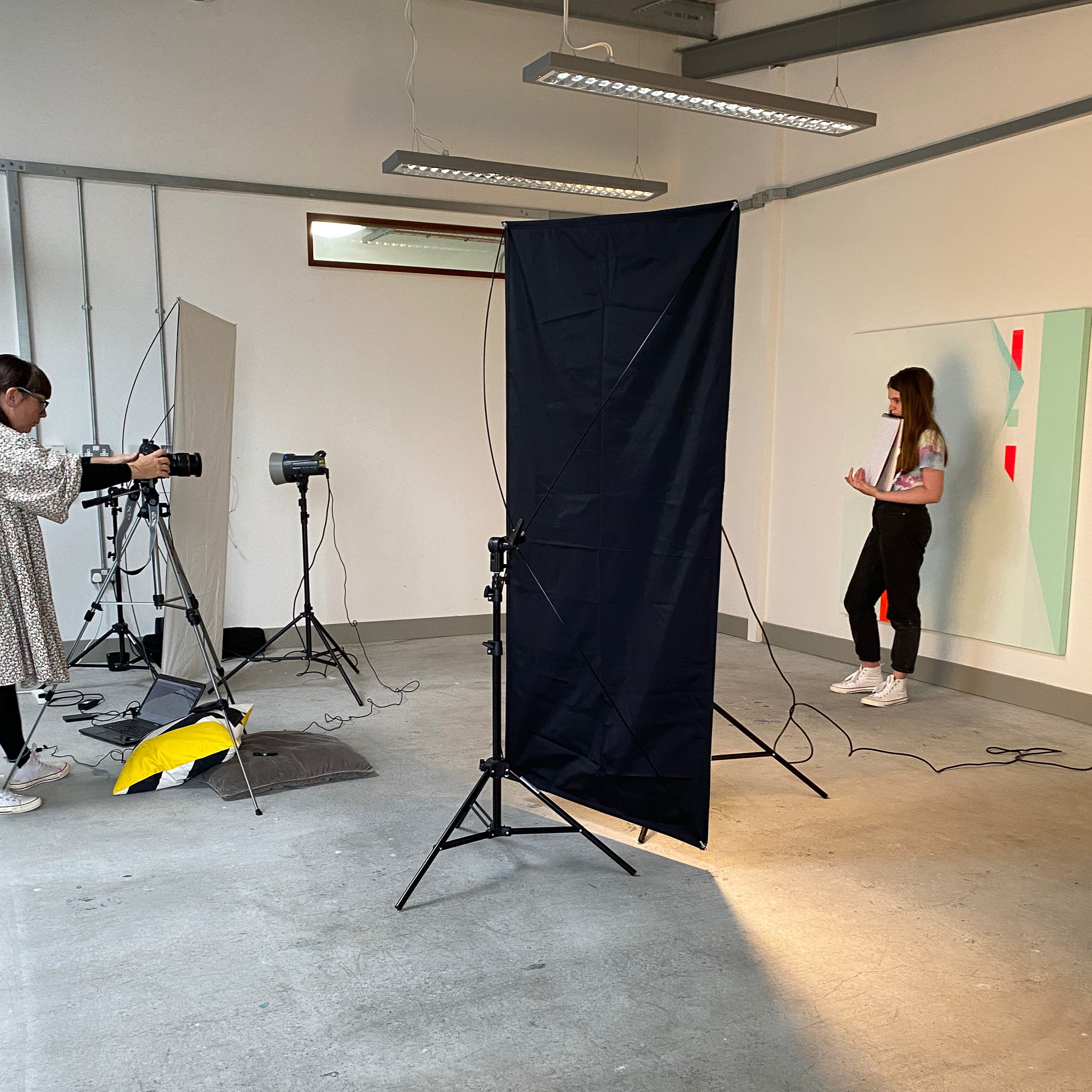
Take a look at the large scale paintings for sale which are available to be purchased.


Available to purchase online, or in-person from me by booking a private studio view
These large scale paintings are in artist’s acrylic with water-based gloss paint, or water-based gloss paint, which gives texture and visibility to the medium of the paint upon the surface.
Take a look at them here in more detail, or drop me a line for a studio visit, zoom call or videos of the works.
Transportation either in person by hand, or via courier in the UK. If you are overseas and have your own shipping company then this is possible too, however, shipping from the UK is very expensive at present. Please get in touch to discuss further
I retain an exhibiting body of work of my practice, to be able to share my work with more people. While not all of my works are for sale, I have made these new works available to buy through my website, and I accept commissions for work in this practice.
More about my current works in this decade
My close focus to the material of the paint and the canvas as being ‘as one’ continues to be a theme within these works, but adds in the additional aspects of light and the viewer, lifting the viewer bith physically and emotionally as they feel the ebergy of the work.
Through the exploration of the properties and abilities of paints to their most clear and luminescent ability, by using fluorescents, pastels and clean, pure colours, I aim to feel uplifted by the paintings and to share that energising impact of colour with the viewer. The paintings seem to glow and emit light bringing the colour to its highest light emission, in parts casting light out and off the canvas, bringing the focus on colour both into the painting plane itself yet also to its’ surroundings, and also showing the ability of paint with material (particularly in relation to pieces made from acrylic) to itself create light.
The ‘canvas’ both interacts with the paint as a layer itself, and provides the physical layer on which the paint can sit and perform to a great degree. By seeing surface textures through sheer veils of paint or heavy elevations in the paint application, we are reminded of the process of painting and the physicality.
By bringing the paint layers out from the ‘canvas’ we are able to experience two dimensions in a three dimensional way, in opposition to enclosing the three dimensions into a two dimensional illusion. We feel and we experience the energy that has been given by the artist to the piece through the process of painting which brings the painting into reality and this is reflected back at us.
Sign up to emails to stay informed
Sign up to emails to be informed about new works and events